
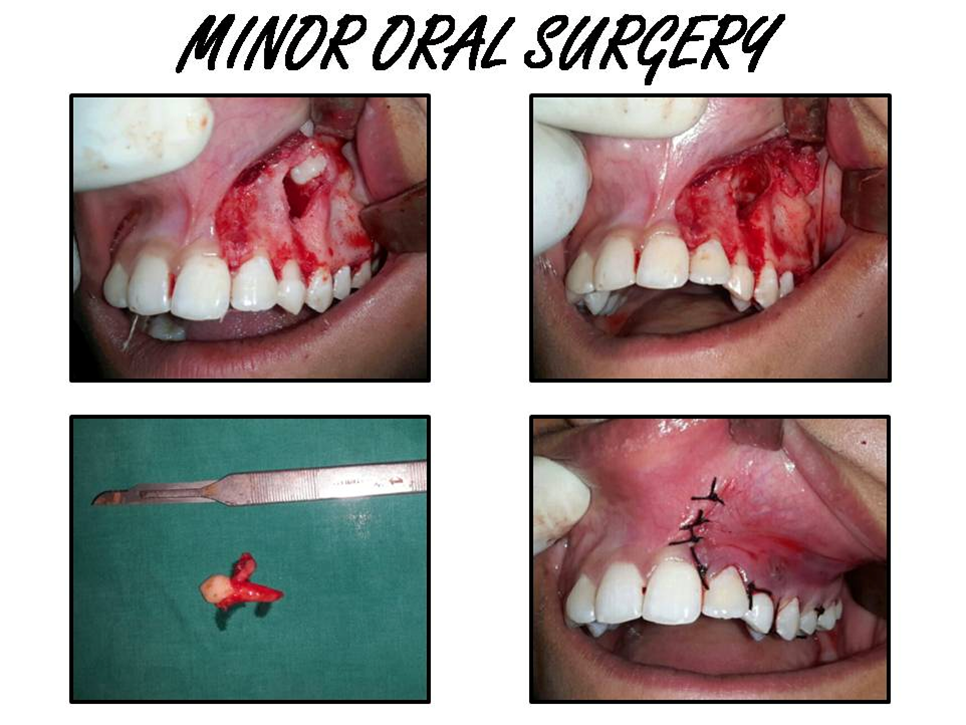
<h3><strong>What is Oral Surgery?</strong></h3> <p>Oral surgery is a broad term for any operation performed on your teeth, gums, jaw or surrounding oral and facial structures. It includes a wide range of procedures, including teeth extractions, dental bone grafts, periodontal (gum) grafts and corrective jaw surgery. Our doctor Dr Gargi Madiwale is a skilled experienced Oral Maxillofacial surgeon who will help you out.</p> <h3><strong>Why is Oral Surgery performed?</strong></h3> <p>You could need oral surgery for a number of reasons. Your dentist might recommend it if you have:</p> <ul> <li>Extensive tooth decay</li> <li>Badly broken teeth</li> <li>Gum Diseases</li> <li>Impacted teeth</li> <li>Dental Implants</li> <li>Missing teeth</li> <li>Temporomandibular Joint Disorders (TMD)</li> <li>Bone loss in your jaw</li> <li>Sleep apnea</li> <li>Oral Cancer</li> <li>Benign oral pathology (noncancerous lumps or bumps)</li> <li>Cleft lip & palate</li> <li>Facial Trauma</li> <li>Facial Injectable</li> </ul>
There are several types of oral surgery procedures performed each year. Some of the most common include tooth extraction, dental bone grafts, dental implants, periodontal surgery, corrective jaw surgery, sleep apnea surgery and cleft lip and palate repair.
Tooth extraction
The most common type of oral surgery is tooth extraction (tooth removal). An extraction might be recommended if you have severe tooth decay, gum disease (periodontitis), dental trauma or wisdom teeth complications. Sometimes tooth extractions are performed to prepare you for dentures or other prosthetic devices.
Most dentists prefer to save natural teeth when possible, but sometimes extractions are necessary to preserve your overall oral health. Additionally, many dentists recommend wisdom tooth extraction as a preventative measure to reduce your risk for cavities, bone loss and other problems.
Periodontal Surgery
Other type of oral surgery focused on the structures surrounding the teeth rather than the teeth themselves. For eg. if you have gum recession periodontal plastic surgery may be recommended to protect tooth roots that have become exposed & are endangered to decay.
Dental Bone Graft
A Dental Bone Graft is necessary when bone loss has occurred in your jaw. There are a couple of reasons why this may occur. When your natural teeth are present, the roots stimulate the nerves in your jaw. This signals your brain to send nutrients to your jaw, keeping it strong and healthy. If a tooth has been missing for some time, bone deterioration can occur in that area because there are no roots to stimulate the nerves. A dental bone graft restores volume and density in your jawbone so that dental implants can be placed later on.
If bone loss is the issue, tooth supporting bone can be rebuilt with routine grafting techniques. This procedure has allowed many people to get dental implants, when they wouldn't have otherwise good candidates for this life changing tooth replacement technology.
Dental Implants
Dental Implants are widely considered the most reliable and longest-lasting teeth replacement option available. These small threaded posts — made of medical-grade titanium or zirconia — are embedded into your jaw to replace missing teeth roots. Once the implants are healed, they can be restored with dental crowns, dental bridges or dentures.
Corrective jaw surgery
Corrective jaw surgery — also called orthognathic surgery — addresses skeletal abnormalities of your jaw bones. This procedure may be recommended to improve chewing function, correct misalignment or address facial imbalances. Corrective jaw surgery is also used to ease pain caused by TMJ dysfunction (TMD).
Cleft lip and palate repair
A baby born with cleft lip has an opening in their upper lip, while a baby born with cleft palate has an opening in the roof of their mouth. Some babies are born with both conditions. Cleft lip and palate occur when the facial structures don’t fully develop in the uterus (womb). Oral and maxillofacial surgeons commonly perform cleft lip and palate repair to restore normal eating function and help a child develop proper speech patterns later on in life.
Facial Trauma/Facial Injury
At Glaze Dental & Aesthetic Clinic, Dr Gargi Madiwale is trained, skilled & uniquely qualified to manage & treat facial trauma. He is well trained in emergency care, acute treatment & long term reconstruction & rehabilitation not just for physical reason but emotional as well. We deliver emergency room coverage for facial injuries,which include the following conditions-
Facial Infections
An infection in the face, neck or jaws may require an oral surgeon to drain the infected area and treat any teeth that may be causing the infection or affected by it.
Maxillofacial Pathology
If you have noticed any kind of swelling in your mouth or facial region whether its painful or not immediately seek an advice from Maxillofacial Surgeon as reason behind such swelling could be a jaw Cyst, jaw tumor or facial infection. Delay may only aggrevate the condition
Biopsies
If you have a lesion in your mouth that looks suspicious, a biopsy is usually perform to confirm pathology. Dr. Gargi Madiwale will remove a small piece of tissue & send it to the lab for analysis.
Snoring/Sleep Apnea
If you experience severe snoring or sleep apnea and other treatment methods have been ineffective, our treatment ranges from non surgical modalities like antisnore device for severe cases your oral surgeon can perform surgery to correct these issues.